This page is under construction 🚧








All that i wanted to be was given effortlessly is a two-part installation combining projection mapping, 3D animation, and simulations with Still-Together v2 — a three.js browser game exploring connections between manic psychosis and new media theory. Viewers encounter the work as atmosphere first: illusion, light, visual lure. Then they find the laptop behind the screens.
front side = projection / atmosphere / lure back side = laptop / game / system Still-Together v2 = the interactive core underneath the projected surface
Eight shoji panels are arranged in the space, but only seven display visuals. One panel is folded behind and covers another — one image is hidden even though the light is still present. Something is always just out of reach, like there's another layer you almost see but never fully access. The grid of the rice paper reads like pixels. The diffusion gives everything a dreamy, slightly faded quality — somewhere between present reality and recollection.
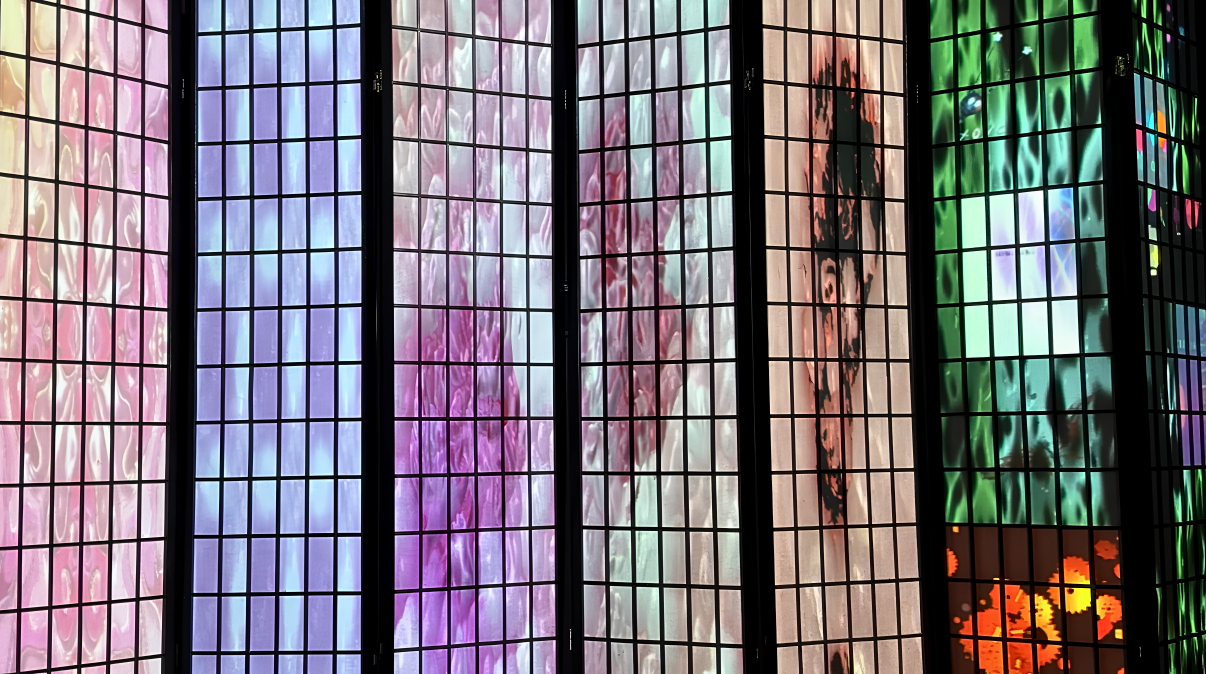
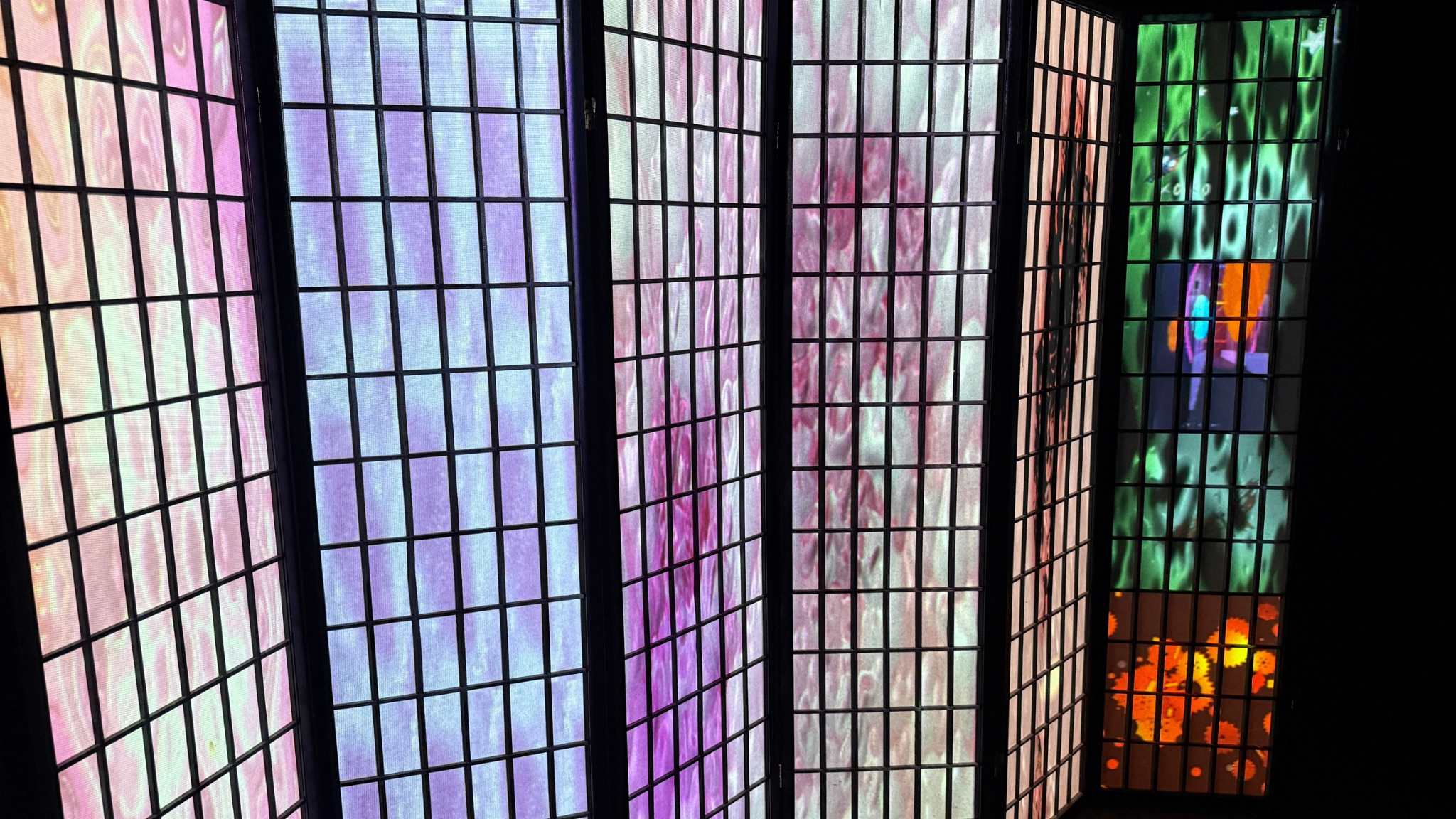
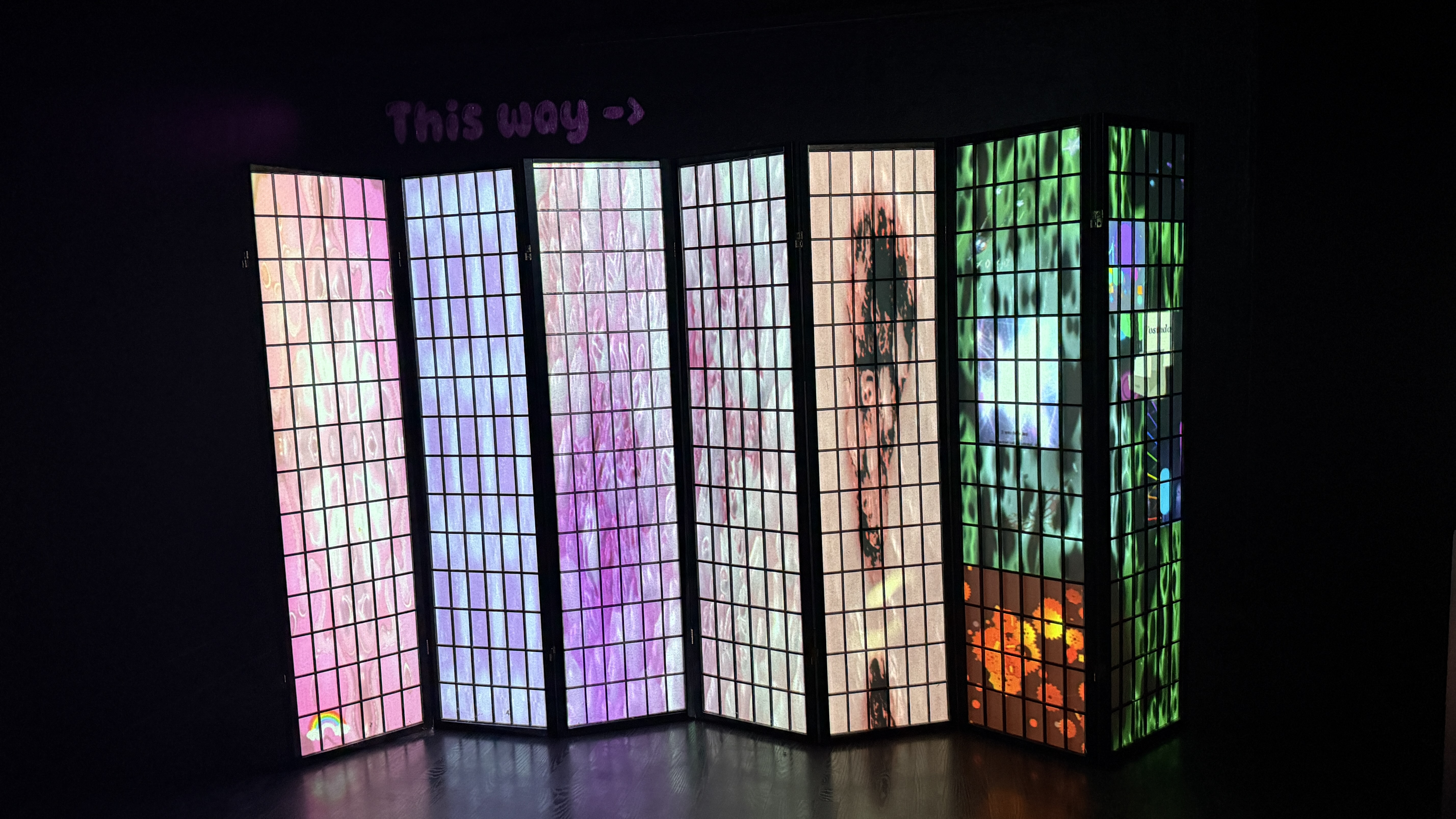
The visuals move left to right across the panels, each one flattening dimension a little more. It starts with a polished 3D animation — complete, immersive, a full surface. Then shifts into simulations: first a glittery cubic one, then three that feel organic and tissue-like, almost biological. The visuals grow darker, more ambiguous. Screen recordings of Still-Together begin to layer in. Instead of cutting between things, the wall holds all these states at once across space.
These clips show a recorded play session already running — without the viewer. Visitors watch the recorded moves, then walk behind the screens and place their own hands on the laptop, completing the loop from observer to participant. Their bodies slip into the same circuit the footage previewed. Embodied virtuality, as Hayles describes it: nothing on a screen floats free of flesh and hardware. The instant you tap a key, your body and the code start co-driving the experience.
The light feels like it's leading you toward something meaningful. And it is — it leads you to the game. But it's also an illusion. The closer you get, the more the image breaks down. Rice paper diffuses the projection so instead of gaining clarity, you lose it. That reversal reflects how mania can feel: following signs feels meaningful and clear, but can lead somewhere unstable. The installation is a portal — but not a stable one. It opens into a space where meaning keeps slipping just out of reach.
Doorways between states. The installation itself is a portal — from light to system, surface to depth, observer to player. Inside the game, portals mark the same threshold: another layer you almost see but never fully access.
Encrypted glyphs scattered throughout the interface. They mark pathways, suggest meaning, hide deeper layers beneath the glossy surface.
Unexpected moments of instability. Error messages appear and dissolve. The system momentarily reveals its seams.
Navigable spaces within the interface. Players move through luminous corridors, encountering projections and simulations along the way.
Vertical transitions between levels of the system. Climbing suggests ascension, descent implies depth and hidden infrastructure.
Language breaks down in the game space. Words distort, messages fragment, meaning becomes contingent and multivalent.